
My Oura ring taught me something about sports marketing that no dashboard ever has.
We often describe sports as entertainment. But our bodies experience it as something far more consequential.
I was fortunate enough to attend the US Open last week. While sports are my professional world, this trip wasn’t client-related. It was simply an opportunity to use some PTO, watch world-class tennis, and enjoy a few Honey Deuces along the way.
I thought I was sitting quietly in Arthur Ashe Stadium, taking in the matches like any other fan.
My Oura ring had a different opinion.
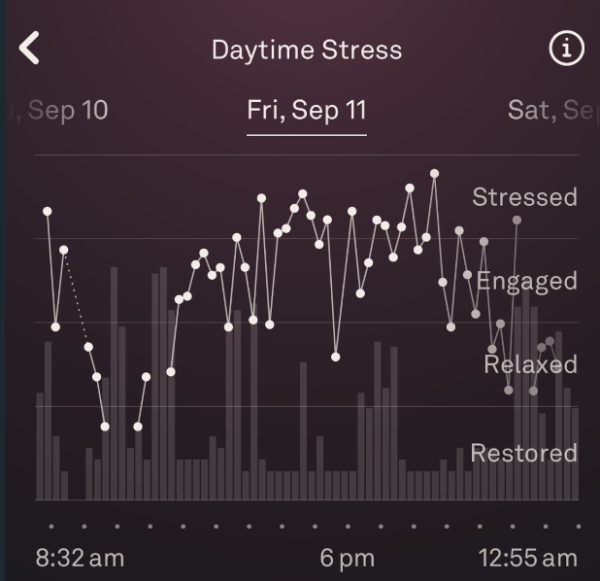
Each evening, I returned to the hotel and checked my daily metrics, only to discover that my stress levels had remained elevated for hours. According to my biometric data, I hadn’t spent the afternoon watching tennis.
I had spent it competing.
It was almost absurd. My heart rate, stress, and recovery metrics documented the emotional roller coaster of each match as though I had been the one serving for the championship.
That’s when it hit me.
The most interesting thing happening at live sporting events isn’t always what’s taking place on the court. It’s what’s happening inside every fan watching it.
Holding your breath before match point.
Groaning after an unforced error.
Debating electronic line calls.
Celebrating points.
Being shocked at serve speeds (153 mph, come on.)
Those moments aren’t passive entertainment. They’re physiological experiences.
As marketers, we’ve spent decades measuring engagement through impressions, clicks, views, shares, watch time, conversions, and sign-ups. Those metrics tell us what people saw.
They rarely tell us what people felt.
A person can watch a 30-second commercial without experiencing any measurable emotional response.
A tennis match can leave someone physically stressed while sitting perfectly still for three hours.
That’s the unique power of sports.
The very best brands don’t simply earn attention. They create emotion. And sports may be one of the few platforms where audiences aren’t just consuming content. They’re physically participating in it.
As wearable technology has become mainstream, it raises an interesting question for our industry:
What if the future of engagement is measured by how audiences’ bodies respond?
Heart rate variability. Stress. Recovery. Excitement. Anticipation.
These aren’t replacements for traditional marketing metrics, but they may become some of the most meaningful indicators of genuine connection.
Did someone feel something?
Because if my Oura ring is any indication, I wasn’t just watching the US Open. My body was playing every point alongside the athletes.
And maybe that’s the most powerful thing about sports marketing.
The future isn’t about getting brands closer to the content.
It’s about getting brands closer to human emotion.
Linden White
EVP, Account Management & Integrated Services
rEvolution